
but please remove your hat:
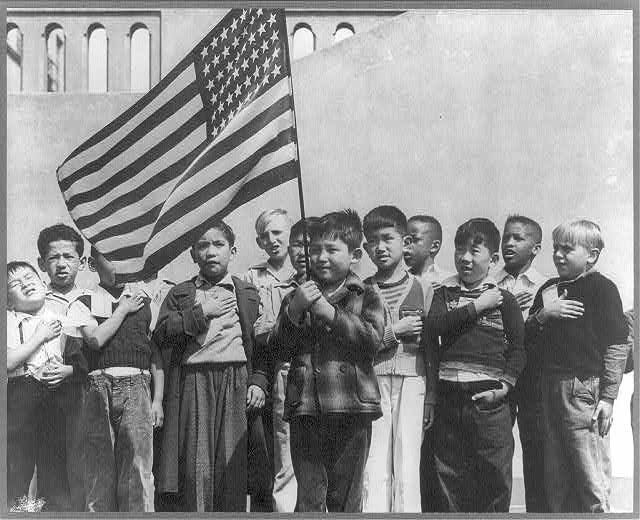
It was on this date in 1777 that the Stars and Stripes was adopted as the official flag of the United States of America.
The first Flag Day observance was not held on the 100th anniversary of the adoption of the Stars and Stripes on June 14, 1877, as some sites might tell you. But read on, bunkies; this seems to be the real story:
In 1861, at the start of the Civil War, a man named George Morris persuaded his city of Hartford, CT, to undertake a patriotic celebration on behalf of the Union. But the concept didn’t catch on, either there or elsewhere.
Two decades later, in 1885, a 19-year-old Waubeka schoolteacher named Bernard Cigrand plunked a small flag into an inkwell on his desk and assigned his students to write essays on patriotism. Later, he traveled the country promoting respect for the flag and eventually became president of the American Flag Day Association.
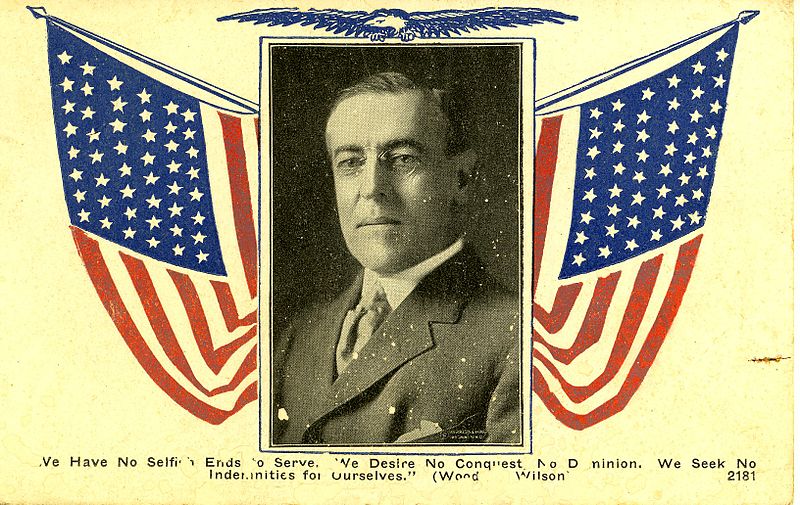
In 1916, after years of toil, Cigrand persuaded President Woodrow Wilson to issue a proclamation on May 30, 1916, calling for a nationwide observance of Flag Day.
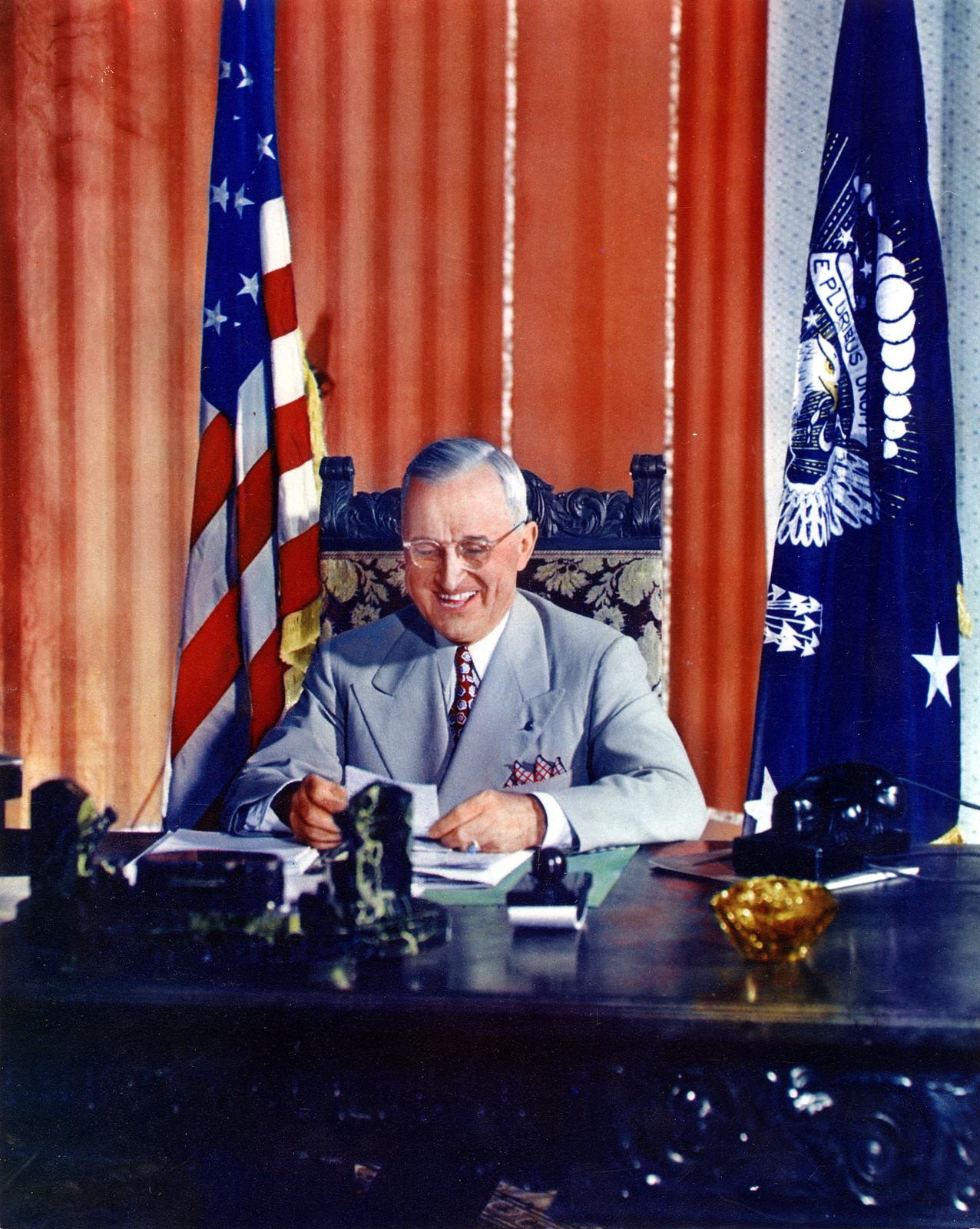
In 1949, President Harry Truman signed an Act of Congress designating the 14th day of June each year as National Flag Day.
So now you know. (You may now be seated and put your hat back on.)

