
A heart is not judged by how much you love, but by how much you are loved by others.

While you’re drinking your Valentine’s Day cocktail alone, opine upon this –

When Rome was first founded, wild and bloodthirsty wolves roamed the woods around the city. They often attacked, mauled, and even devoured Roman citizens – which, incidentally, is why the city took more than a day to build.

With characteristic ingenuity, the Romans begged the god Lupercus to keep the wolves away. Lupercus was the god of the wolves, so he was expected to have some influence over their behavior.
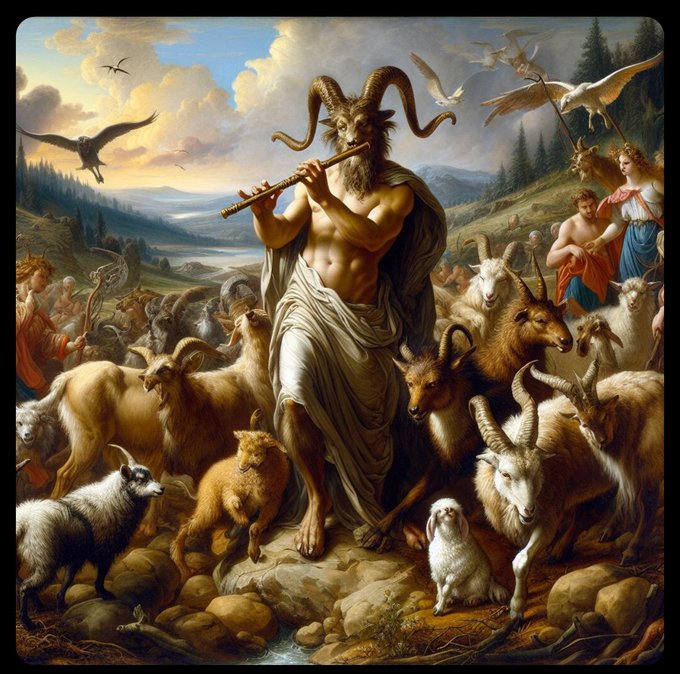
He didn’t.
Wolves kept attacking, and Romans kept dying.
This led the Romans to the obvious conclusion that Lupercus was either angry or away on business. It was a serious problem either way. Up to this point in their history, the Romans had addressed all of their problems with one of two solutions: the first was to pray to their gods. All right, they’d tried that. It didn’t always work.
The second solution was to get drunk out of their minds and have an orgy.
So, in an effort to get their slacker god’s attention, they threw a huge party in his honor. They called it Lupercalia. It was an early spring holiday celebrated on February 15 because, in spite of their classical educations, the Romans were as bad at reckoning months as they were at building roads—it was impossible to leave the city, for example, because all their roads led right back to Rome.
Because it was a spring festival, and because Lupercus either didn’t know or didn’t care how many Romans were devoured by wolves, and because the Romans weren’t wearing anything under their togas, Lupercalia gradually became a kind of swingers’ holiday.
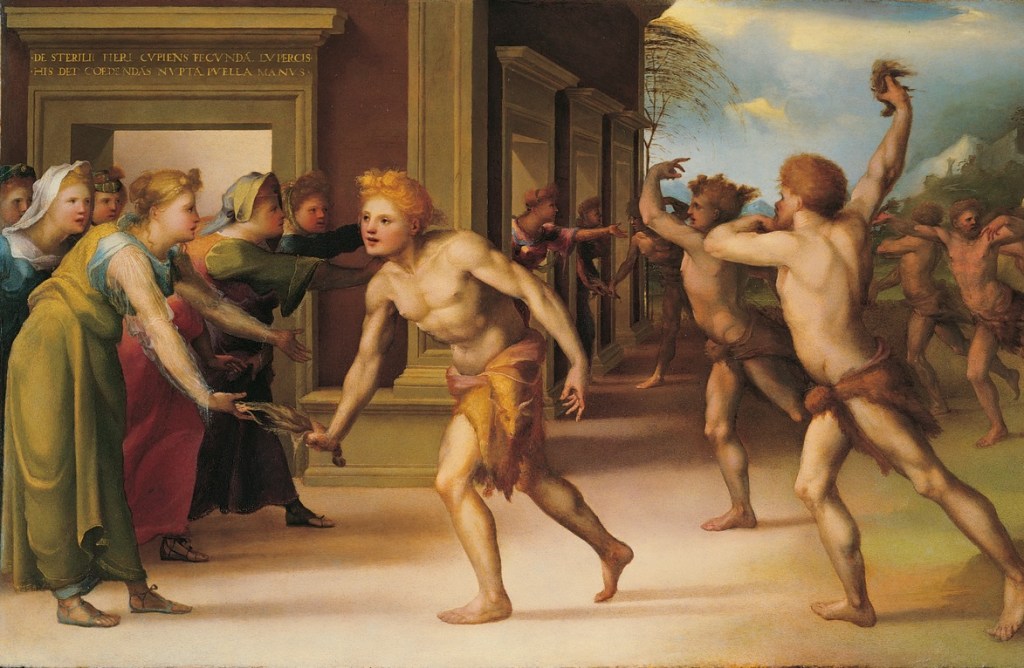
On Lupercalia Eve, Roman girls wrote their names on slips of paper that were placed into a large jar. The next day, every eligible young man in Rome withdrew a slip, and the girl whose name he drew became his lover for the year. Also on the eve of the feast, naked youths ran through Rome, anointed with the blood of sacrificed dogs and goats, waving thongs cut from the goats’ hides. If a young woman was struck by one of these thongs, fertility was assured. Much grab-ass ensued.
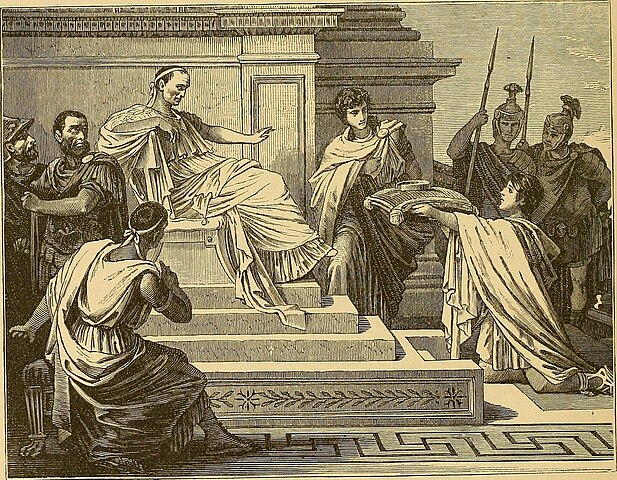
Naked and gore-drenched, Mark Antony, after a crazed run through the Roman Forum during the feast of Lupercalia, offered Julius Caesar the imperial crown of Rome. Caesar demurred and, one imagines, told Mark Antony to go home, take a shower, and get dressed.
As an interesting aside, lovers would sometimes sew their beloved’s name onto their sleeves, from which we get the expression “wearing your heart on your sleeve.” Not, as is commonly believed, “Who the hell taught you how to sew?” Also, this must have been one hell of a party.
Romans were still attacked and killed by wolves, but no one really gave a damn now that they were all getting laid.
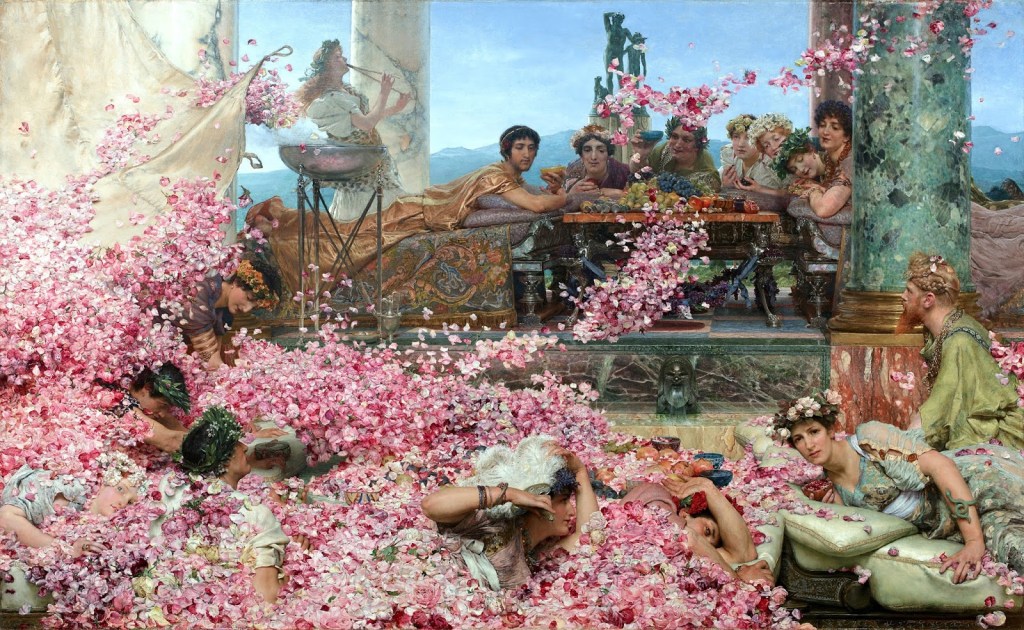
The festival endured.
Hundreds of years went by.
In the early years of Christianity, the Roman Emperor Claudius II was having problems with his army. Many of his soldiers were married men, and they could not be convinced that marching off to godforsaken barbarian backwaters to kill disgusting savages was more important than staying home and having sex with their wives.

Claudius ordered his soldiers not to marry. To be absolutely safe, he ordered priests not to perform marriages for soldiers. Not many soldiers wanted to marry priests, so this wasn’t a major complication (though some of them might have preferred to marry other soldiers—but that’s another story).
Now, there was one old priest who thought the emperor’s policy was unfair. It wasn’t so much that he wanted to marry any soldiers – he enjoyed playing the field – but he felt he ought to be able to perform the holy rite of matrimony for soldiers who wished to marry women (and be tipped accordingly—remember, this is the Catholic Church—nothing happened unless you remembered to tip your priest). He began conducting secret Christian marriages.
The priest was quickly arrested and imprisoned. On Lupercalia Eve in 270 A.D. – that’s February 14, remember – he was decapitated.
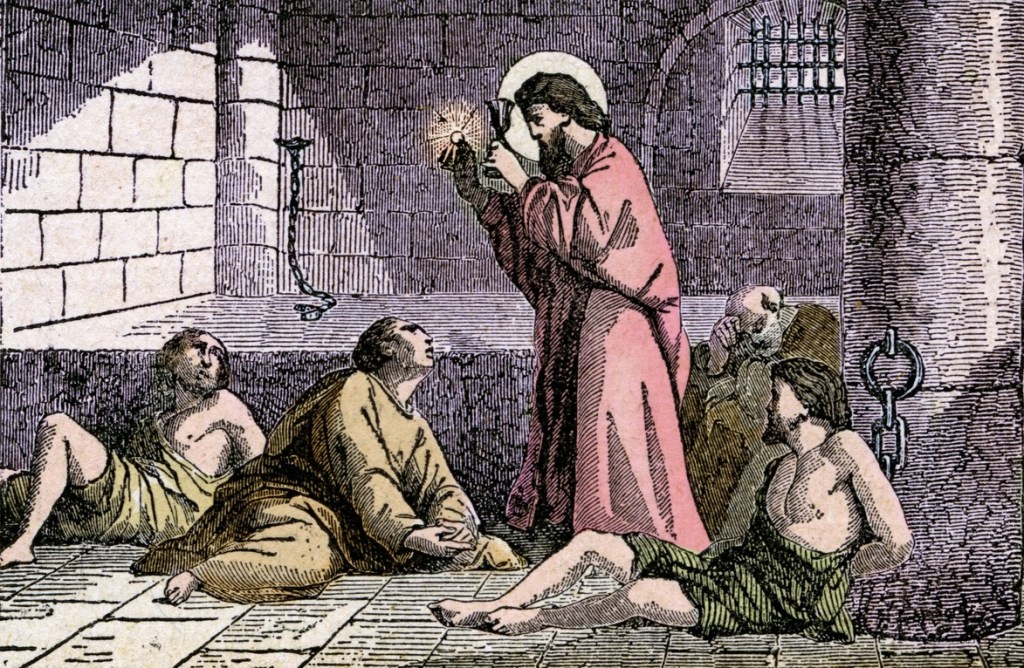
That priest’s name was, of course, Marius.
Arrested, imprisoned, and beheaded alongside him, however, was another priest who had also been performing secret marriages – a handsome young priest named Valentine.

We don’t know much about old Valentine, but there are plenty of apocryphal stories. One tells how, while he was in prison, Valentine fell in love with the blind daughter of his jailer and eventually restored her sight. Another claims Claudius was so moved by Valentine’s eloquent defense that he offered to cancel the execution if the priest would abandon Christianity. But there’s also a story about an old lady putting her dog in the microwave … and you don’t see me going off on that tangent.
As time went on, people forgot about old Marius, who hadn’t been very photogenic. They remembered the handsome Valentine, and eventually he was canonized.
There was a new saint in town—St. Valentine.
And, like most saints, he’d been dead for years. But for all the fuss over what he did while he was alive, he has been absolutely spectacular in death.
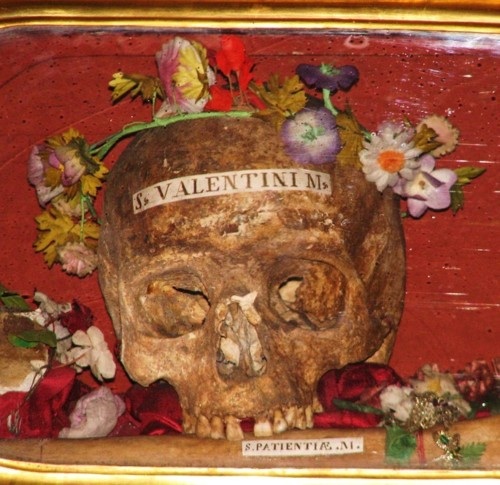
His relics are on display today at St. Francis’s Church in Glasgow, Scotland. They can also be seen at Whitefriar Street Church in Dublin, Ireland. They’re at the Church of Saint Praxedes in Rome and the Collegiate Church of Saint-Jean-Baptiste et Saint-Jean-l’Évangéliste in Roquemaure, France, as well as in eight other churches, two cathedrals, and – if eBay listings are to be believed – just about everywhere else. The Raëlians could learn a thing or two from this dead saint.
If you were to gather all of St. Valentine’s remains from these churches, you’d have enough raw material for three new bishops, two deacons, and a linebacker. Giving sight to the blind is impressive, but as miracles go, it’s the equivalent of a card trick. Multiplying your remains after you’re dead, though… now there’s a miracle.
But, as the Spartans say, let us return to our sheep.
(And let’s not ask what they intend to do with their sheep.)
One day the Christian Church took control of the calendar, which the Romans had reduced to one long series of overlapping holidays. The Christians moved Lupercalia back a day and renamed it St. Valentine’s Day. No one objected to this change, since Lupercus still hadn’t saved a single soul from the wolves and the Romans still weren’t wearing anything under their tunics.
And so St. Valentine’s Day came to be celebrated as a harbinger of spring, a glorious tribute to the romantic splendor of Christian marriage, and a time for some good old-fashioned pagan fornication.
More centuries passed.
Christianity spread, the calendar was finally refined, and the holiday evolved into what it is today: a glorious midwinter celebration of passion, romance, and toe-curling sex. In some countries, it’s also celebrated by married couples.
(It should be noted that St. Valentine was removed from the General Roman Calendar in 1969, not because the Church objected to commercialization, but because so little was historically certain about him.)
Valentine’s Day Cards
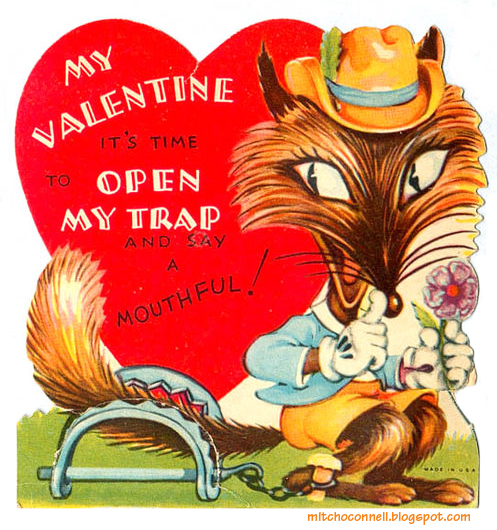
On the day he was finally led to his execution, the jailer’s daughter – the blind girl he’d supposedly taught to see – couldn’t bear to say goodbye. Valentine, with the patience of a saint, said farewell in a letter. He signed it, “From your Valentine.”

“The phrase,” one source informs us, “has been used on his day ever since.”
But that’s not true. I should have known it wasn’t true, since the source happened to be the guy sitting next to me in the bar where I did all my research.

The first known Valentine card – by which I mean one signed by someone whose name wasn’t actually Valentine – was sent in 1415 by Charles, Duke of Orléans, to his wife.
The Duke had been captured at the Battle of Agincourt and was imprisoned in the Tower of London. He probably wasn’t trying to be romantic so much as clever. Signing a love letter “Your Valentine” didn’t mean “your adoring spouse.” It meant “your husband, still in jail, possibly about to have his head chopped off.”

Two hundred and fifty years later, Samuel Pepys, likely familiar with the Duke of Orléans episode, wrote romantic verses to his wife on Valentine’s Day and signed them “Your Valentine.” Since he was neither imprisoned nor awaiting decapitation, this may have been the first modern Valentine.
Today, of course, billions of Valentines are exchanged each year, many of them from people not in jail or facing execution. And by the time you finish reading this, more than three-quarters of a million sex acts will have occurred worldwide (every minute, humans engage in approximately 83,333 of them). Many are probably illegal in Texas.
And so it goes
 The Haus of Dcaligari