
European history would have been dramatically different—if only for a higher-fiber diet.
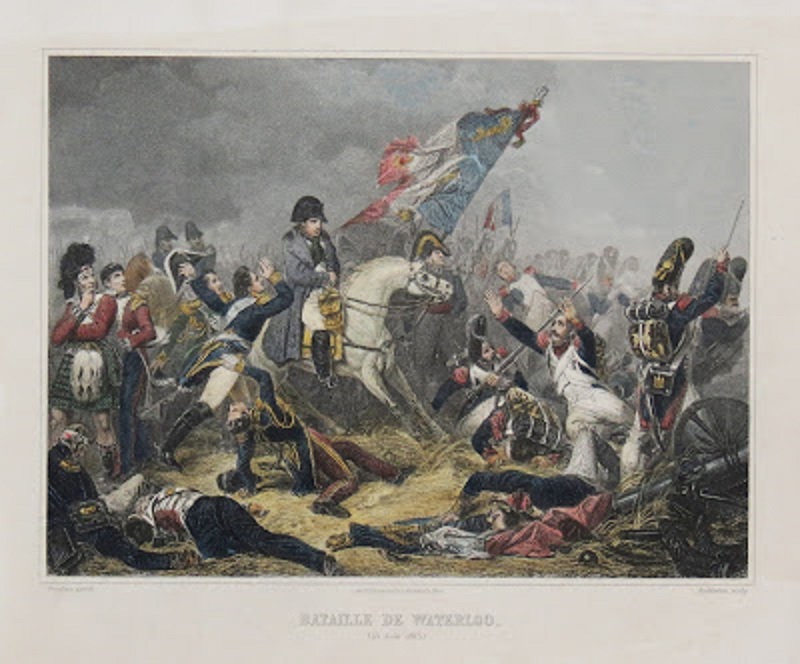
One of the most decisive battles in European history was fought in Belgium on June 18, 1815, as a resurgent Napoleon Bonaparte launched his final military offensive against the Duke of Wellington and the Prussian Marshal Blücher. Nearly 50,000 men were killed in the battle. Napoleon lost, in part, due to a case of inflamed hemorrhoids.
The battle was later commemorated by Swedish sensation ABBA in their 1970s hit Waterloo.
ABBA’s interpretation of Waterloo’s significance has been controversial from the start, as it focuses less on the military and political implications of the battle than on the feelings of euphoria typically incited by hormonal rushes of erotic excitement.
On June 18, 1817, Waterloo Bridge was opened over the River Thames in London.

And if that weren’t enough, to commemorate the high-fiber diet of the Duke of Wellington, on June 18, 1822, the British government erected the first nude public statue since antiquity—an 18-foot bronze Achilles—in London’s Hyde Park, in his honor.

It caused such offense that women and small children were forbidden to amble through the park, and a fig leaf was eventually added.
All of this builds to the fact that ABBA performed Dancing Queen at a televised all-star gala on this date in 1976, held at the Royal Swedish Opera in Stockholm on the eve of the wedding between Sweden’s King Carl XVI Gustaf and Silvia Sommerlath. One imagines the Swedish King consumes plenty of muesli and yogurt, keeping him quite regular—and on the throne—for these past 52 years.
(This will all be on the test.)
 The Haus of Dcaligari