
September 19, 1692 –
Giles Corey was accused of witchcraft in 1692. This put him in a difficult spot. If he pleaded guilty, he’d be burned alive at the stake. If he pleaded not guilty, he’d have to take a lie-detector test.
The state-of-the-art lie detector of 1692 wasn’t any less accurate than today’s models, but it was significantly rougher on its subjects. It was called “dunking.” The tightly bound subject would be dunked repeatedly into a pond or lake until the truth emerged.
One of the primary symptoms of demonic possession was immunity to water, so those who survived the process were rewarded with a warm, dry burning at the stake. Those who drowned, on the other hand, were clearly innocent and received a favorable ruling.
Giles Corey wasn’t eager to be burned at the stake, but he wasn’t keen on posthumous vindication, either. A plea of guilty meant the stake; a plea of not-guilty meant drowning (or the stake, depending on the results of the lie-detector test). Mr. Corey therefore did what any reasonable person might have done: he claimed his Fifth Amendment rights under the Constitution and said nothing.
This was a foolish and costly blunder, as the Constitution had not yet been written.
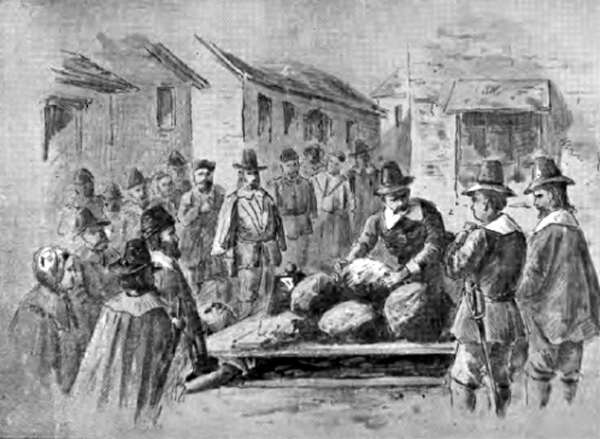
Baffled by the accused refusal to enter a plea, the court pressed him for an answer. Literally. Giles Corey became the first, last, and only American ever to have been pressed to death by his own government, on this date in history.
And so it goes
 The Haus of Dcaligari