It was a tense April in Boston in 1775. The colonists were simmering with resentment toward the motherland, on account of King George III having strewn the colonies with excessive tacks, painful to step on and bothersome to the horses. Furthermore, British cabbies had refused to unionize, and the colonists were adamantly opposed to taxis without representation.
King George III tried to assuage the riled colonists by sending them boatloads of tea. (King George III was insane.) The colonists dressed up like Indians and poured all the king’s tea into Boston harbor, proving they could be perfectly insane without any help from the king.
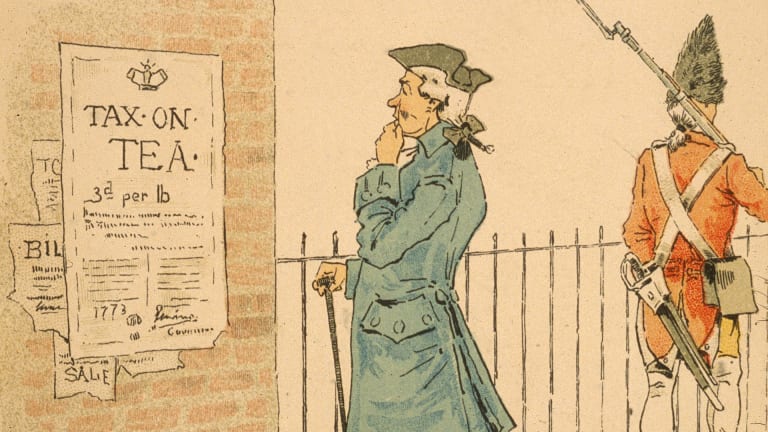
Meanwhile, a network of colonists had been secretly meeting for some time. They reasoned that since they preferred coffee to tea, liked salad before rather than after the entree, and couldn’t make any sense whatever of cricket, they were obviously no longer British. Perhaps they had become French, or Portuguese. Finally they took a vote, which proved they were American.
The king’s colonial representatives overheard some of these discussions, and decided to arrest as many of these patriots as possible, unless they could kill them first.
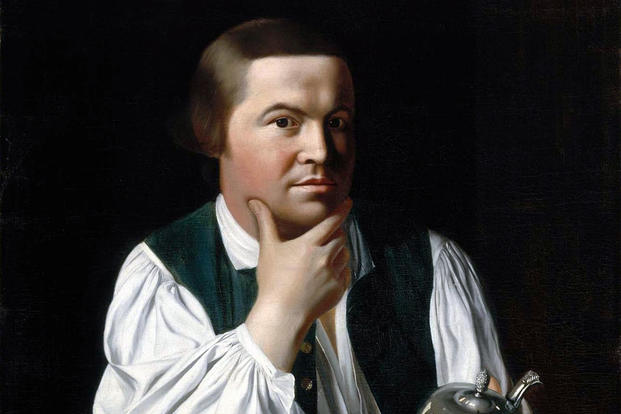
On April 18, 1775, Paul Revere, (William Dawes and Samuel Prescott) got wind of the British officers’ plan to arrest John Hancock and Sam Adams in Lexington that very night – arrests that would have been calamitous to the colony’s fledgling insurance and beer industries.
Anticipating colonial unrest, British officers had deployed Regulars on all the key roads between Boston and Lexington. (The Regulars had previously proved effective even where the Irregulars and Extra Longs had failed.)
Revere told some friends to hang two lanterns in Boston’s Old North Church, in order to signal his wife that he’d be late for dinner, and immediately set out for Charlestown. Once there, he mounted a horse and began the ride to Lexington.
He found himself almost immediately pursued by Regulars, whom he eluded by means of wily Boston riding tactics: he took a series of lefts from the right lane and a series of rights from the left, utterly confounding his pursuers, who were anyway accustomed to riding on the other side of the street and still weren’t sure what to do at a blinking red light. One of the Regulars rode straight into a fruit stand and ended up covered in produce. Another rode through a big plate glass window that two workmen were carrying across the road. It was pretty funny.
Just before midnight, Revere finally arrived at Jonas Clarke’s Lexington home, where he breathlessly informed Adams and Hancock that the British were coming. This confounded Adams and Hancock, who, like Revere, were themselves British.
Once the confusion was cleared up, Adams and Hancock fled for safety while Revere and two others rushed on to Concord. Many memorable and important historical events ensued, such as the American Revolution, but by then it was April 19th, and therefore no longer appropriate to this date’s entry.
Although Henry Wadsworth Longfellow’s poem immortalized Paul Revere alone. Revere was the least heroic, he was captured by British patrols and held for awhile before he was released without his horse.
Please indulge your local tea party members today.
And so it goes
 The Haus of Dcaligari