March 7, 1917 –
Russia’s 1917 February Revolution began on March 7, which was then the middle of February, in the city of St. Petersburg, which was then Petrograd, in what was then Russia, but would soon be the Soviet Union.
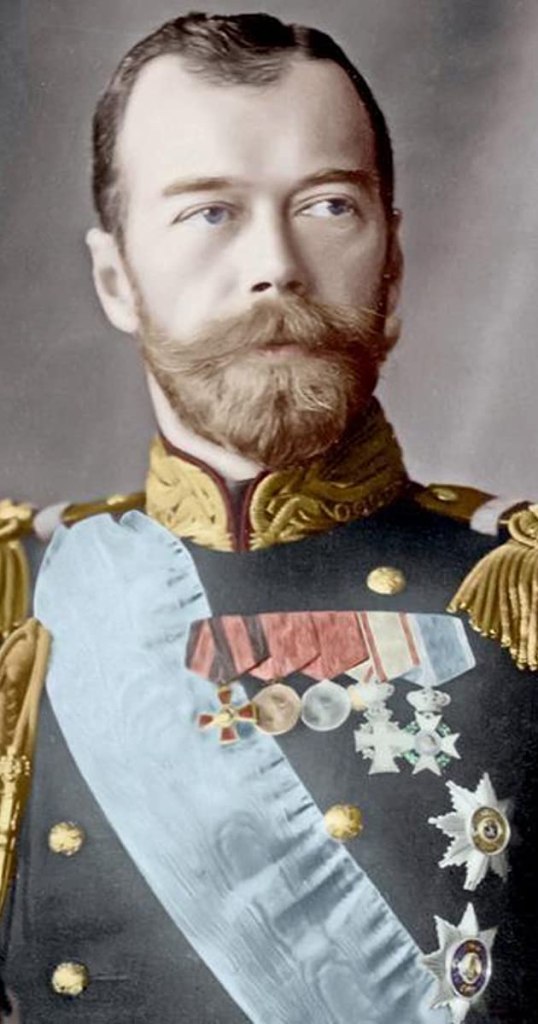
Tsar (or Czar) Nicholas II of the Romanov (or Romanoff) line had been away from St. Petersburg (or Petrograd) most of the winter, leading his army against the German Empire’s Eastern Front (or Russia’s Western Front).
Russia’s peasants and workers had become exhausted by the war and its attendant famine and were exasperated by the Tsarina’s indifference to their suffering. They were furious with the government, which had become two governments and therefore twice as bad. And they were tired of all this nonsense about March being February, St. Petersburg being Petrograd, the Czar being Tsar, and all those crazy, mixed-up fronts.
In short, the peasants were revolting. And so these poor bastards began a series of riots and strikes that eventually led to what is now known as the February Revolution.
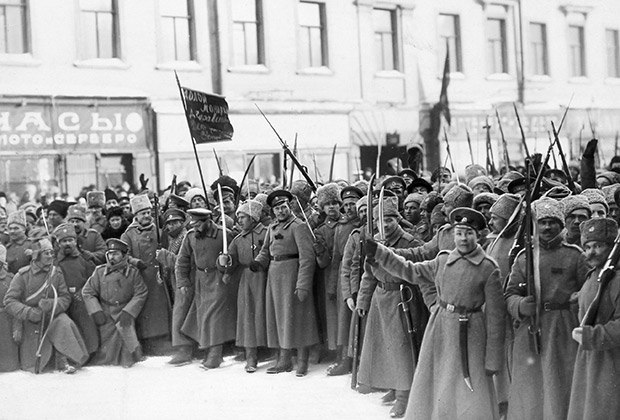
With her usual delicate touch, the Tsarina tried to assuage the rioters by having them shot, but her soldiers refused to fire on the crowds. She therefore ordered the soldiers to shoot themselves and was disobeyed again.
It was a bleak moment for the House of Romanov, which like most monarchies had endured through the centuries largely as a result of its soldiers’ willingness to shoot people.
One Year later:
On March 7, 1918 the Bolsheviks changed their name to the Russian Communist Party.
Bolsheviks is Russian for majority, as opposed to Mensheviks, which means minority. The Mensheviks, however, were in fact the majority party in 1918, and the Bolsheviks the minority, so the name change helped ease the work of journalists, who had become so confused they’d begun writing stories about children and ducks.
 The Haus of Dcaligari